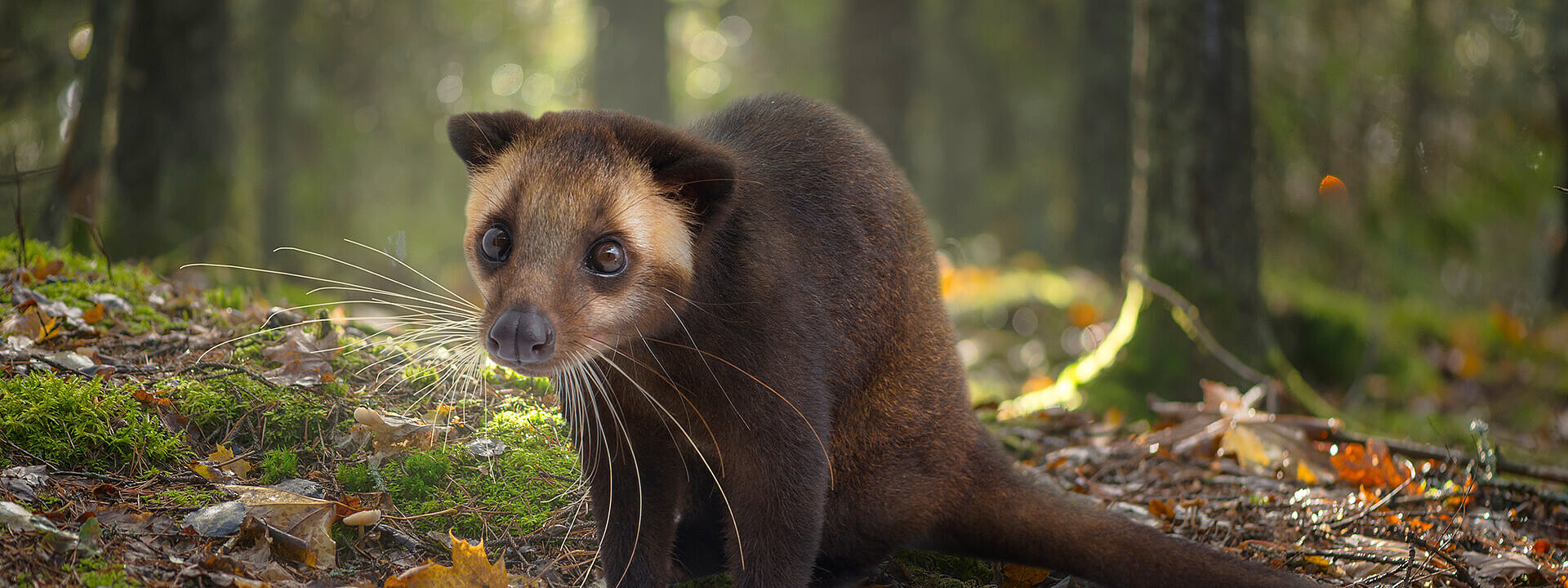
Masked palm civet
Paguma larvata leucomystax
IUCN red list status:
Least Concern
For more informations, please visit iucnredlist.org


Omnivores, eating a variety of fruit, insects, palm sap and small rodents, birds and reptiles
Found in the south Sumatran forests of south-east Asia

Wild: around 10 years; Captivity: up to 20 years

Little is known about their reproduction, but it is thought that they can have between 1-5 individuals.
Masked palm civet
This elusive subspecies of civet is larger than most civets found within south-east Asia. They are brown-to-black in colour with a white mask and light tipped tail. They live a very secretive life, so there is very little known about this subspecies. Through some observations it can be deduced that they are known to be nocturnal and a formidable opportunistic predator. They have been known to eat a variety of fruit, insects, palm sap and even hunt for small mammals and reptiles. Their fruit consumption means this species plays an important ecological role within the ecosystem, to help disperse seeds through their faeces.
Although they are classed as 'Least Concern' on the IUCN Red List their population is threatened from poaching and being sold within the pet trade to exploit and produce coffee known as 'Kopi Luwak'. At DMR we support The Civet Project who engages local farmers in Vietnam and raises awareness among consumers about the cruel practices associated with Kopi Luwak and advocate for policy change.
Did you know?
As a Viverrid they have potent anal glands that will secrete a volatile scent, that is predicted to discourage predators. Their 'mask' is thought to serve as a warning to these potential predators of this defence response.